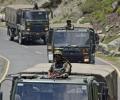
Looking into the current situation on the China boarder, IOC has stocked up enough winter-grade fuel for the region. With army movements increasing, the demand for this fuel is expected to increase multifold from the 350 metric tonnes last winter.
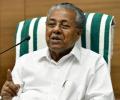
The Kerala chief minister's four years in office may well be remembered for the way he handled Cyclone Ockhi, two floods, Nipah, and now COVID-19, reports Shine Jacob.

A company official said work stopped temporarily only at two rigs and the remaining 34 in the offshore were operational. He added there was no impact on the company's production.

The trade deal, officials say, can lead to an effective trading bloc against the China-led Regional Comprehensive Economic Partnership.

Govt has already approached World Bank seeking termination of contract. The progress of the project was just 20 per cent though the contract was awarded in 2016.

While freight traffic has gone up, the Google location data shows more people are stepping out of their homes.
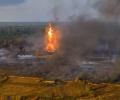
Singapore-based Alert Disaster Control, one of the largest disaster management companies in the oil and gas sector, has already joined the team of experts from ONGC and OIL, reports Shine Jacob.

This includes an infrastructure push which may lead to the government spending more than its budgeted capital expenditure for 2020-21. There are also discussions on increasing the scope and quantum of direct cash transfers to the beneficiaries who need it the most.
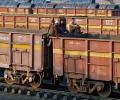
Freight earnings too saw a decline of Rs 8,284 crore to Rs 13,412 crore in the first two months of FY21, compared to Rs 21,696 crore during the same period last year.

'Given the 50 per cent or thereabouts increase in borrowing that has been announced, it is a reasonable estimate to say that at this time, an increase of 1.7-1.8 per cent on the 3.5 per cent budgeted fiscal deficit target is being anticipated,' Chief Economic Adviser Krishnamurthy Subramanian said on Friday.

OMCs' Digital India move is likely to have an impact on more than 80.3 million Pradhan Mantri Ujjwala Yojana consumers, majority of whom are not exposed to digital transact.

'It is a package for a new self-reliant India.'

This comes at a time when the COVID-19 crisis is expected to derail the government's revenue maths for 2020-21, hitting the mop-up from sources such as taxes and divestment.
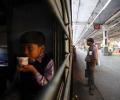
Railway traffic has dropped 32 per cent to 99.86 mt between April 1 and May 14, compared to the same time last year, while its revenue, too, dipped 41 per cent to Rs 9,094.38 crore.

According to industry experts, the consumption of petroleum products in the month of April was only 30-40 per cent of what it had been prior to the lockdown. Due to this, refineries were forced to bring down their capacity too.

These conditions are implementation of the 'One Nation, One Ration Card' scheme, ease of doing business, power sector reforms, and urban local body reforms.
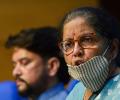
Later, there may be some tax relief aimed at the middle class and measures to benefit the sectors worst hit by Covid-19 and the resultant nationwide lockdown.

For many the resumption of trains is a big boon, but some say it doesn't come without confusion and worries

There could be multiple measures announced in quick succession, not only by the finance minister but also other ministers regarding their respective sectors, and by the Reserve Bank of India. The total size of these announcements could rival that of other G-20 nations as a percentage of GDP.
No change in retail prices as oil marketing firms to absorb increase
 © 2026 Rediff.com - Investor Information - Advertise with us - Disclaimer - Privacy Policy - Sitemap - Feedback - About us - Terms of use - Grievances